
#WTH: The Trump Problem
And the deal with Iran

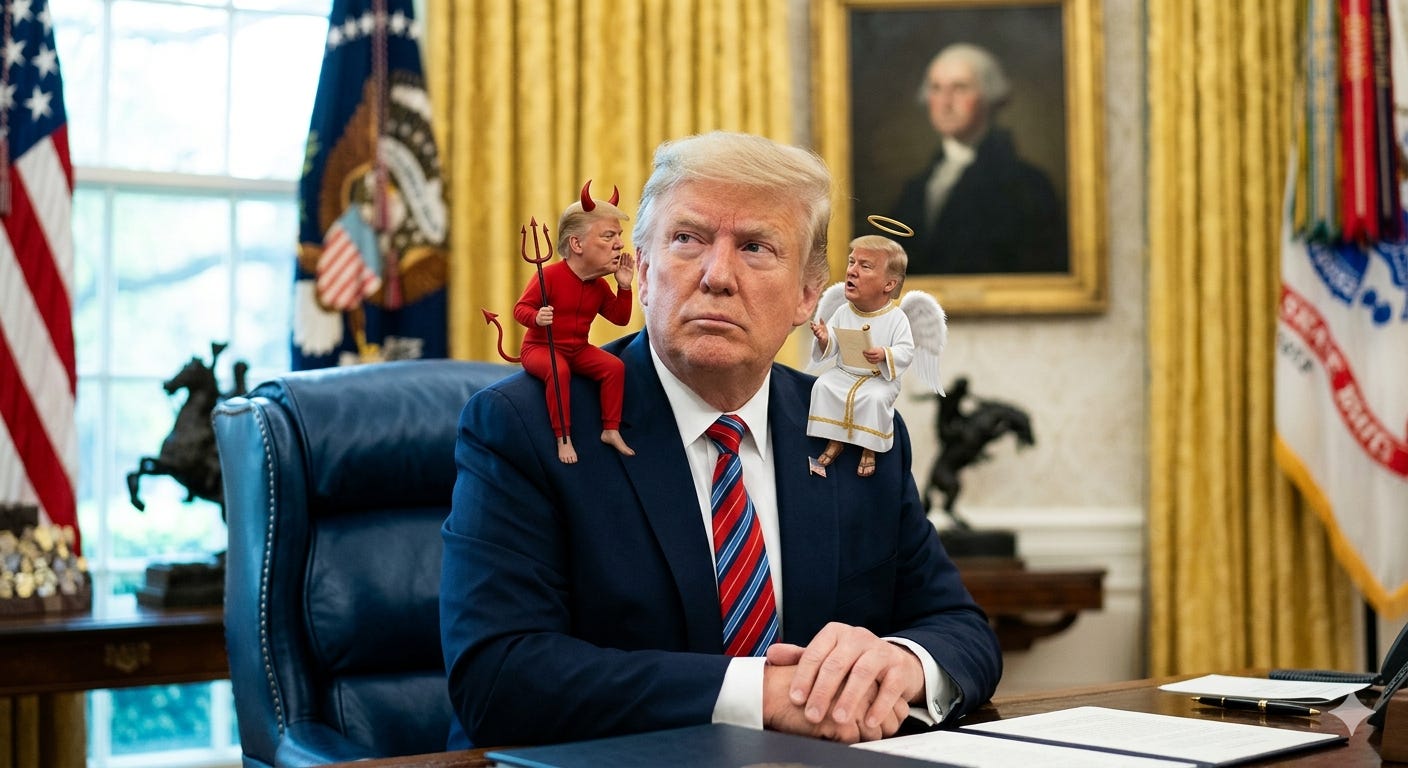
What is so terrific about Donald Trump — a large part of the reason he got elected, really — is that he will do and say things most politicians won’t. Unfortunately, that’s also what’s so terrible about Donald Trump.
Say what you will, the indifference of seven presidents to the threat posed by Iran has been intolerable. Each has professed to address the problem of Iran’s threat to its own people, it’s missile program, it’s sponsorship of terrorism, or its nuclear program, while in reality kicking the can to the next commander in chief.
So, while there’s a lot to condemn in the Trump presidency, several things have kept many of us going. The first, and most important, is that the choice was never between Donald Trump and a better candidate. It was between Trump and one of the most feckless twits to run seriously for the presidency in many a year.
Then there were the tough issues that almost any other Republican, and definitely every other Democrat would have tolerated, if not also exacerbated: immigration, crime, woke insanity, climate rubbish, European free riding, etc.
And of course, there’s Israel, and the insanity of rampant antisemitism: Trump wasn’t buying any of it, and even if his VP liked to swim in Tucker Carlson’s swamp, DJT wasn’t having it. And with Israel, the Islamic Republic of Iran. Donald Trump didn’t like the Islamic Republic, he didn’t trust the Iranians, and he ripped up the lousy JCPOA Iran deal. And he was willing to back up his instincts with military force.
Now, there’s a lot — a LOT — on the other side. The tariffs, the flirtation with Russia, the soul selling to Qatar, the incapacity to recognize the threat from China, the disdain for allies and friends, and damn, the incredible corruption. And the shallow vanity propitiated by toadies across the government. So awful; so wrong; so embarrassing for our country.
But, we remind ourselves, it’s not a choice between someone who wants his name on the Kennedy Center and Ronald Reagan. Or even Bill Clinton. It’s a choice between Trump and a Democratic Party that would be unrecognizable to its forefathers. On balance, one is less awful than the other. Which brings us to Iran.
Here are the reported elements of the deal that the President says will be signed on June 19 in Switzerland:
End to US blockade of Hormuz and reopening, Iranian demining
60-day ceasefire
60-day negotiations regarding Iranian nuclear program
Discussion of sanctions relief and release of frozen Iranian assets
End to fighting in Iran and Lebanon
Agreement to be signed June 19
Here’s what Iran says is the deal:
Permanent and immediate cessation of war on all fronts, including Lebanon
The US commitment to non-interference in Iran’s internal affairs and respect for the sovereignty of the Islamic Republic of Iran.
Complete lifting of the naval blockade within 30 days
The US commitment to withdraw its forces from around Iran
Reopening of the Strait of Hormuz within 30 days under Iranian arrangements
Suspension of sanctions on the sale of oil, petrochemical products, and derivatives, and full access of Iran to its financial resources.
The necessity for the US and its allies to present reconstruction plans for Iran amounting to at least 300 billion dollars
60 days of negotiations to reach a final agreement based on nuclear issues and the complete lifting of primary and secondary US sanctions, and UN Security Council and IAEA Board of Governors resolutions
Reiteration of Iran’s commitment under the NPT treaty not to produce nuclear weapons
During the negotiation period, the US has committed not to add forces in the region and not to impose new sanctions.
Release of 24 billion dollars of Iran’s blocked funds during the 60-day final negotiation period. Half of this amount must be made available to Iran before the start of negotiations.
Formation of a supervisory mechanism to implement the agreement.
The final agreement will be approved by a UN Security Council resolution.
Final negotiations will not begin before the release of half of Iran’s blocked funds, suspension of Iran’s oil sanctions, and lifting of the naval blockade, and the final agreement will only cover the fate of enriched materials and enrichment, lifting of sanctions, and Iran’s economic reconstruction plan. Discussions about Iran’s missile program and support for resistance groups are definitively removed from the agenda.
These are two very different deals. There is no public version that has been seen by anyone reliable. Journalists report that the Trump administration is frustrated by Iran’s lying. But they won’t call it “Iran’s” lying; just “inaccurate reports.”
Let’s ignore the Iranian claims, and stipulate that the American version is accurate. (I doubt it, but that’s another story.) If this is the case, then the United States has agreed to cease combat operations against the Iranian regime in exchange for the opening of the Strait of Hormuz and the commencement of negotiations over the degree to which Iran is willing to give up its nuclear weapons program in exchange for sanctions relief. A few points:
Iran gave up its quest for a nuclear weapon when it signed the Nuclear Non-Proliferation Treaty.
Iran again gave up its quest for a nuclear weapon when it signed the JCPOA.
Iran has never admitted to having a nuclear weapons program, yet has had a nuclear effort that is inconsistent in any way with peaceful nuclear energy.
Iran has no legal right to control the Strait of Hormuz.
So, basically—assuming everything the Trump Administration is saying is accurate and everything Iran is saying is inaccurate—we have an extension of the ceasefire and an agreement to reopen the Strait, along with hope this will pave the way for an agreement to give up, send off, or otherwise address certain elements of Iran’s nuclear program. Maybe.
Certainly, the 13,000+ strikes on Iran’s military industrial base are not nothing. Iran’s ability to reconstitute its weapons programs is set back. Iran’s access to its nuclear materiel is unclear. However, its support for Hezbollah, Hamas, the Houthis, and others remains intact. Its stranglehold over Lebanon remains intact. Its missile program has not been mentioned. And the 42,000 Iranians murdered by the regime earlier this year? Not a mention.
Absent a nuclear deal of the kind no Iran expert of any stripe believes Tehran would agree to, it is safe to say that while the new regime in Iran has not come out of this confrontation stronger right away, it appears clear that shortly it will be much stronger. The old guard has been swept away; the IRGC is firmly in charge; Iran’s leadership has proven it can withstand the combined might of the United States and Israel; its proxy warfare is untouched; and the new Iran that rises from the ashes will be more dangerous to the United States and its allies.
Worse yet, the United States will have betrayed each of its regional allies, whether Israel, the United Arab Emirates, or Saudi Arabia, and empowered the worst of the worst: Qatar and Turkey.
Perhaps it’s not as bad as it looks. And perhaps Donald Trump will be wise enough to do what’s necessary to eliminate the threat the regime poses. But is doesn’t look like that right now. What it looks like is that version of Donald Trump that had the courage to do what was necessary to stop Iran has lost out to the Donald Trump who got bored and gave up on a war that wasn’t going as quickly as he would have liked. That bodes ill for the future.
Sorry, I meant the Iranian experts of every stripe.
I'm betting that the Iranians of every stripe are wrong.